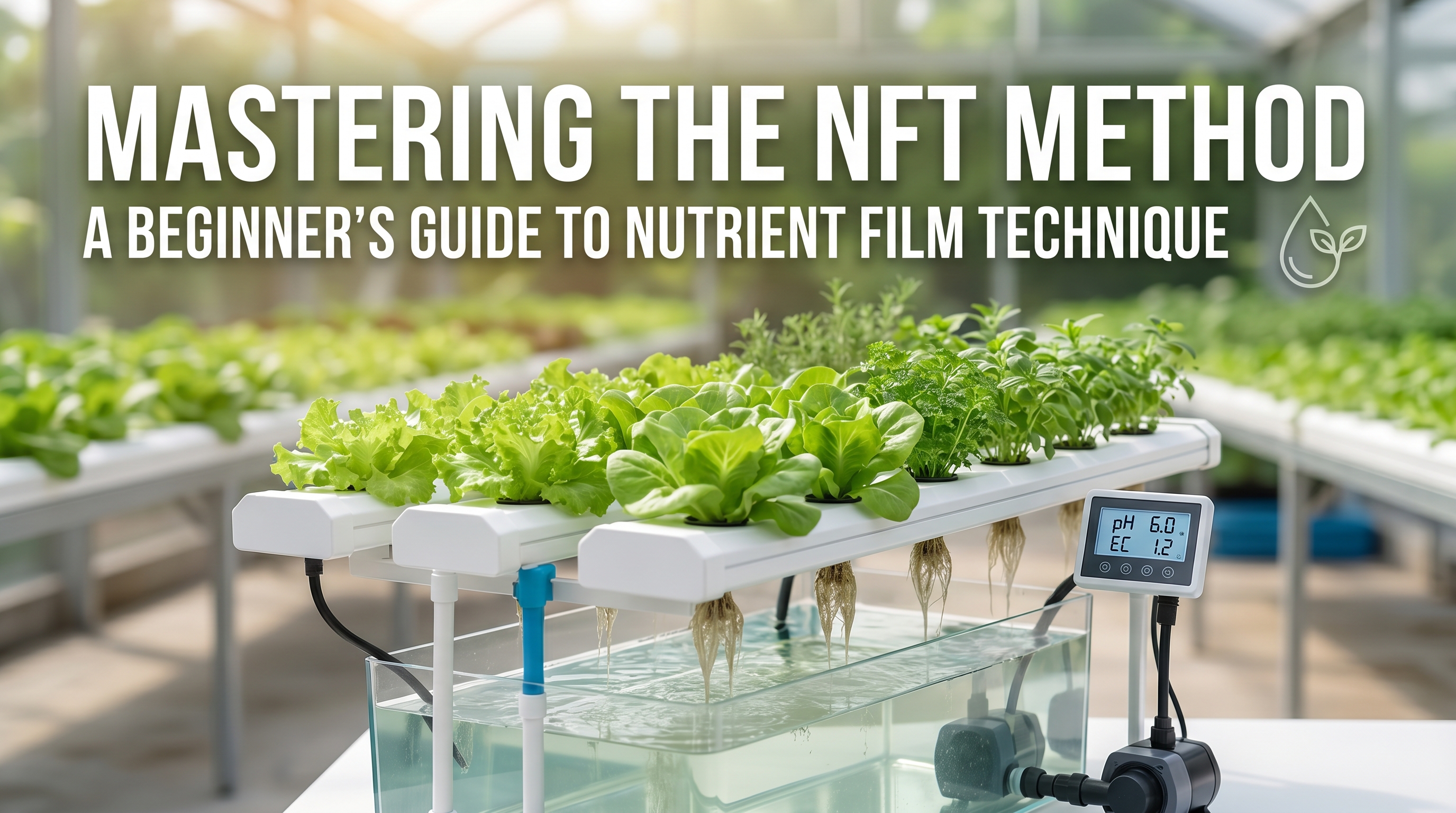
Welcome to HydroMakers, your go-to community for all things hydroponic! Whether you are a weekend hobbyist setting up your first indoor garden or an aspiring commercial grower, mastering the Nutrient Film Technique (NFT) is a true rite of passage. NFT systems are the poster child of modern hydroponics—those sleek, white channels brimming with vibrant, lush heads of lettuce and fragrant basil.
But beneath their clean aesthetic lies a highly calibrated environment where water, nutrients, and oxygen must dance in perfect harmony. In this comprehensive guide, we will walk you through the essentials of setting up your very own NFT system, with a laser focus on the critical details: slope angles, flow rates, and channel selection. Let's get growing!
Introduction to the Nutrient Film Technique
At its core, the Nutrient Film Technique is exactly what it sounds like. A very shallow stream—or "film"—of water containing all the dissolved nutrients required for plant growth is continuously recirculated past the bare roots of plants in a watertight gully or channel.
The genius of NFT lies in the fact that only the bottom fraction of the root mass is submerged in the nutrient solution. The upper section of the root system remains exposed to the moist air inside the channel, providing an abundant supply of oxygen. This high oxygenation is the secret engine driving the explosive growth rates that NFT is famous for.
Why Choose NFT for Your Hydroponic Garden?
Before we dive into the setup, it is important to understand why so many growers choose NFT over other methods like Deep Water Culture (DWC) or Ebb and Flow:
* Water and Nutrient Efficiency: Because the system continuously recirculates a small amount of water, it is incredibly efficient. You use significantly less water than traditional soil farming and even less than some other hydroponic methods.
* No Growing Medium Required: Aside from a small starter plug (like rockwool or oasis cubes) to hold the seedling, NFT requires no growing medium. This saves money and reduces the mess and labor associated with cleaning clay pebbles or coco coir.
* Easy Harvesting and Cleaning: With bare roots resting in clean channels, harvesting is as simple as lifting the plant out. Cleaning the system between crop cycles is fast and straightforward.
Ideal Plants for NFT Systems
While NFT is powerful, it is not for every plant. Because the channels are relatively small and the root space is confined, NFT is best suited for lightweight, fast-growing plants with smaller root systems.
Best choices include:
* Leafy greens (Lettuce, Spinach, Arugula)
* Herbs (Basil, Cilantro, Mint, Parsley)
* Strawberries
Avoid growing heavy, fruiting plants like large tomatoes, squash, or root vegetables in a standard NFT system. Their massive root systems will quickly clog the channels, and the plants themselves will become too top-heavy to be supported without extensive trellising.
Step-by-Step NFT System Setup
Building an NFT system requires precision. The success of your garden depends heavily on the physical setup of your channels. Here is how to get it right.
1. Selecting the Right Channels
One of the most common beginner traps is using round PVC pipes from the local hardware store to build an NFT system. While it seems cost-effective, round pipes are fundamentally flawed for NFT. In a round pipe, the water pools at the very bottom center. This means roots will quickly grow into a dense, narrow mat that blocks the flow of water, causing overflows and uneven nutrient distribution.
The HydroMakers Recommendation: Always use commercial, flat-bottomed NFT channels.
Flat-bottomed channels allow the nutrient solution to spread out into a wide, thin film, maximizing the surface area for roots to access both water and oxygen. Look for channels that have small capillary ridges along the bottom; these ridges help guide the water evenly across the entire width of the channel, preventing dry spots. For most leafy greens and herbs, a channel width of 4 inches is the industry standard.
2. Dialing in the Perfect Slope Angle
The slope of your channels dictates how fast the water moves, which in turn affects both nutrient uptake and oxygenation.
The Golden Rule for NFT Slope: Aim for a ratio of 1:30 to 1:40.
This translates to a drop of 1 inch for every 30 to 40 inches of channel length (roughly a 1.5% to 2% grade).
* If the slope is too flat: Water will pool in the channels. The "film" becomes a deep puddle, oxygen levels drop, and your plants become highly susceptible to root rot (Pythium).
* If the slope is too steep: The water rushes by too quickly. It fails to create an adequate, even film, and the roots may struggle to absorb sufficient water and nutrients.
*Practical Tip:* Use a spirit level and adjustable mounting brackets when building your frame. Once water is flowing, observe the film without plants in the system to ensure it is moving steadily without pooling.
3. Optimizing Flow Rates
The flow rate is the heartbeat of your NFT system. You want enough water to feed the plants, but not so much that you drown the air-breathing upper roots.
The Ideal Flow Rate: For a standard NFT channel, the sweet spot is between 1 and 2 liters per minute (approximately 0.25 to 0.5 gallons per minute) per channel.
When plants are young seedlings, you should lean toward the lower end of this spectrum (1 liter per minute). As the plants mature and their root masses grow—creating more resistance in the channel—you can increase the flow slightly to ensure water reaches the end of the channel.
*Practical Tip:* To test your flow rate, place a large measuring cup at the drainage end of a channel. Use a stopwatch to see how much water is collected in exactly one minute. Adjust your water pump or inline valves until you hit that 1-2 liter mark.
4. Setting Up the Reservoir and Pump
Your reservoir holds the nutrient solution, and your submersible pump pushes it up to the manifold that feeds your channels.
* Sizing: A good rule of thumb is to have at least 0.5 to 1 gallon of reservoir capacity per plant. This ensures the nutrient concentration and pH remain stable as plants consume water.
* Continuous Operation: Unlike Ebb and Flow systems, an NFT pump must run 24/7. The roots have no growing medium to retain moisture; if the pump stops, the roots will dry out and die within a few hours.
* Aeration: Even though the roots get oxygen in the channel, adding an air stone to your reservoir keeps the nutrient solution fresh and prevents anaerobic bacteria from taking hold.
Best Practices for NFT Success
To elevate your NFT game from beginner to advanced, keep these best practices in mind:
* Monitor Water Temperature: The ideal nutrient solution temperature is between 65°F and 68°F (18°C - 20°C). Warm water holds less dissolved oxygen and invites root rot. If your grow room gets hot, consider investing in a water chiller.
* Keep Light Out: Ensure your channels, reservoir, and any tubing are completely opaque. Light leaks into the nutrient solution will cause rapid algae growth, which competes with your plants for nutrients and clogs your pump.
* Regular Cleaning: Between every crop cycle, flush your channels with a mild hydrogen peroxide or bleach solution to sterilize the system and remove any leftover organic matter.
Common Mistakes to Avoid
Even the best growers make mistakes. Here are a few pitfalls to watch out for:
* Channels That Are Too Long: Avoid making your NFT channels longer than 30 to 40 feet. As the water flows down a very long channel, the plants at the beginning absorb the oxygen and nutrients. By the time the water reaches the end, it is depleted, resulting in stunted plants at the tail end of your system.
* Ignoring Backup Power: Because NFT is so vulnerable to pump failures, a power outage can be catastrophic. Serious growers should invest in a battery backup or an automatic generator to keep the pump running during blackouts.
* Overcrowding Plants: It is tempting to cram as many plants as possible into a channel. However, overcrowding restricts airflow around the canopy (leading to mold) and causes roots to tangle and block water flow. Stick to 8-inch spacing for standard lettuce varieties.
Conclusion: Key Takeaways
Mastering the Nutrient Film Technique is an incredibly rewarding journey. By providing your plants with a constant, shallow stream of perfectly balanced nutrients and abundant oxygen, you will achieve growth rates that traditional soil gardeners can only dream of.
Remember the golden rules of NFT setup: ditch the round PVC for flat-bottomed channels, dial in a 1:30 to 1:40 slope, and maintain a steady flow rate of 1 to 2 liters per minute. Protect your system from light leaks, keep your water cool, and always have a plan for power outages.
Welcome to the HydroMakers family—we can't wait to see what you grow! Happy hydroponic gardening!
Comments
Comments feature coming soon. Join the discussion in our community forums!
Visit Community →