Radish Microgreens
Raphanus sativus
Overview
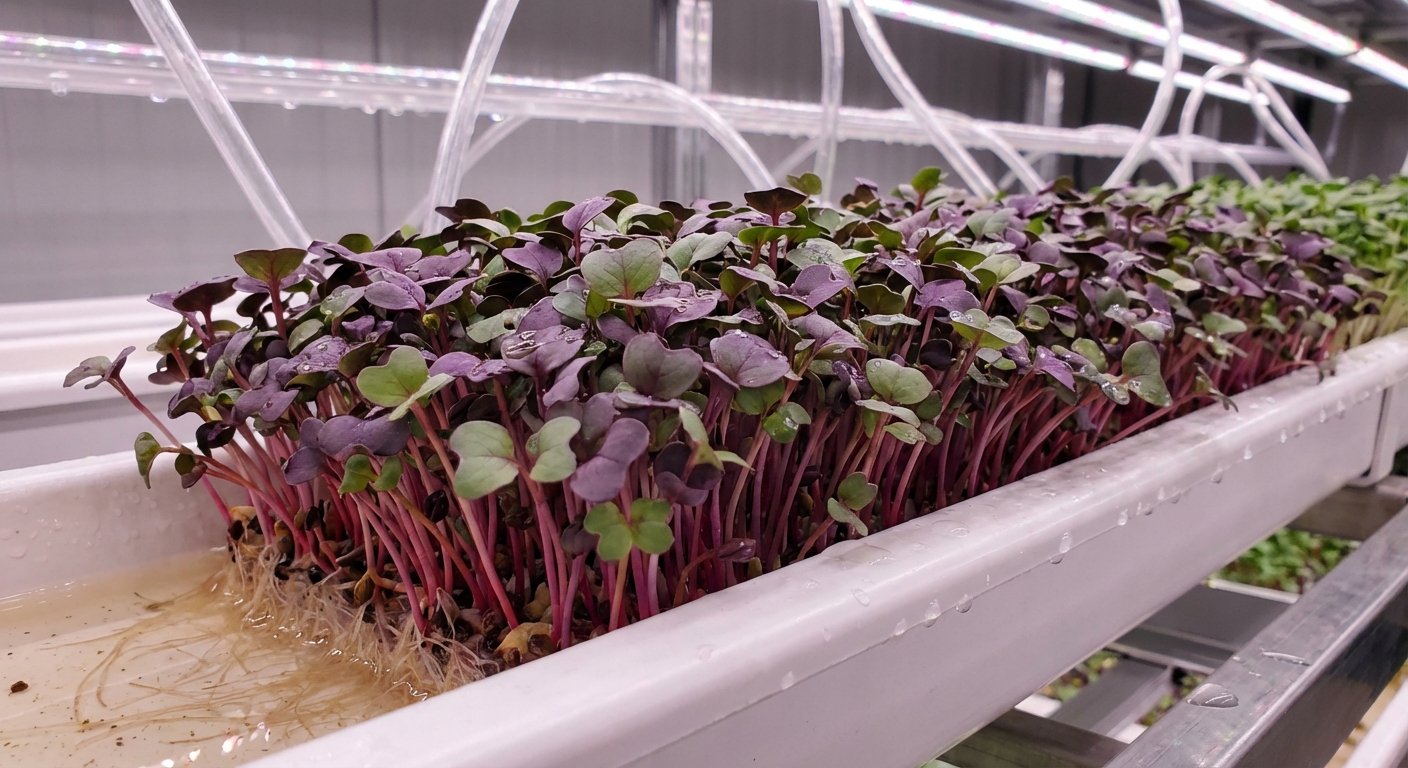
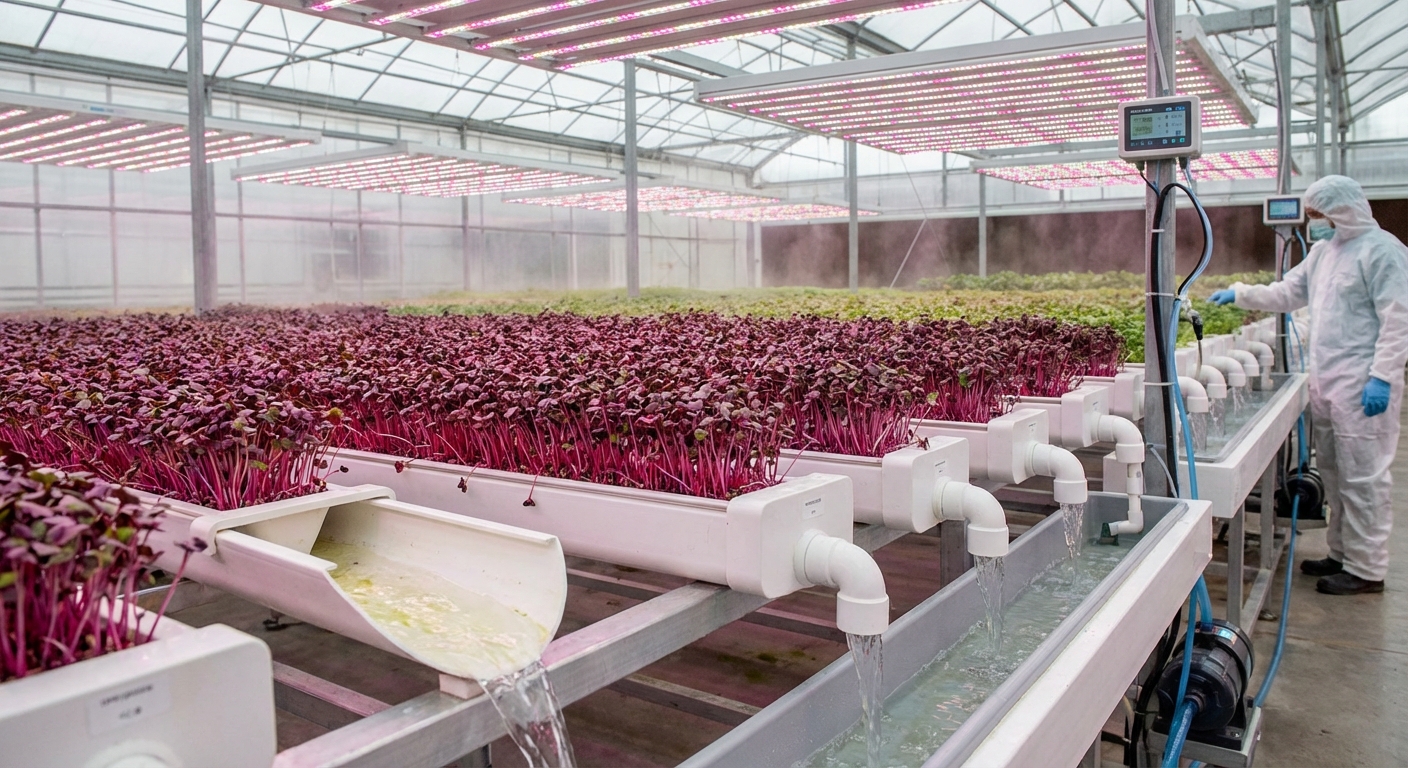
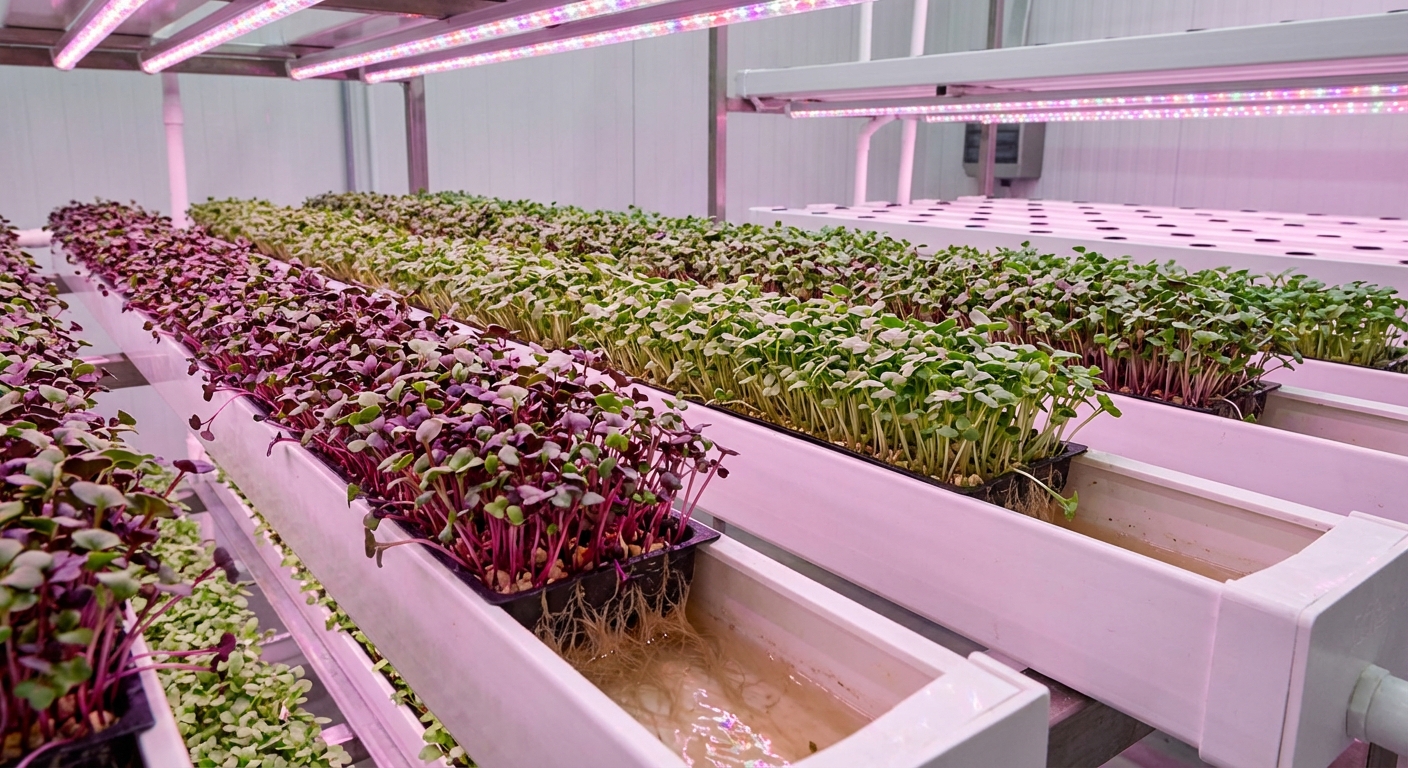
Radish is one of the easiest and fastest crops for hydroponic growers, making it ideal for beginners. In an NFT system, they are typically grown on a mat (hemp, coco, or synthetic) placed within the channel to prevent seeds from washing away. They have a very short turnover time and high yield.
Growing Requirements
pH Range
6 - 7
EC Range
0.8 - 1.2 mS/cm
TDS Range
400 - 600 ppm
Temperature
18°C - 24°C
Light Requirement
Medium (12 hours/day)
Nutrient Needs
Growth Timeline
Germination (Blackout)
2-3 daysSeeds are sown densely on the growing medium in the NFT channel (pump off or very low flow) and covered to maintain darkness and humidity. Roots anchor into the medium.
Greening
1-2 daysCover is removed, and seedlings are exposed to light. The yellow cotyledons turn green (or purple depending on variety) rapidly via photosynthesis.
Vegetative Growth
2-5 daysNutrient flow is normalized. Stems elongate and leaves expand. This is the period of most rapid biomass accumulation.
Common Issues & Solutions
Damping Off
- Stems thinning at the soil line
- Seedlings collapsing
- White moldy growth
- Excessive humidity
- Poor air circulation
- Growing medium too saturated
- Increase airflow with fans
- Reduce watering frequency or flow rate
- Sanitize trays/channels between crops
Leggy Stems
- Tall, weak stems
- Pale leaves
- Falling over
- Insufficient light intensity
- Light source too far from plants
- Lower grow lights closer to the canopy
- Increase light duration
Root Rot
- Brown, slimy roots
- Unpleasant smell
- Stunted growth
- Water temperature too high
- Low dissolved oxygen in NFT reservoir
- Use a water chiller to keep temps below 24°C
- Add airstones to the reservoir
- Use beneficial bacteria supplements
Harvesting Guide
When to Harvest
Harvest when the cotyledons (seed leaves) are fully open and lush, typically between day 7 and 10. Harvest before the first true leaves emerge to avoid a woody texture and bitter taste.
How to Harvest
Use a sharp knife or scissors to cut the stems about 1-2 cm above the growing medium. Avoid pulling, as this may bring up the medium or roots.
Storage Tips
Wash and dry thoroughly (using a salad spinner). Store in an airtight container with a paper towel to absorb excess moisture. Keep refrigerated at 4°C.
Expected Yield
High (approx. 250-300g per 10x20 inch tray area)
Photo Gallery
User Reviews
Reviews feature coming soon